Nvidia Just Gave Robots 44,000 Hours of YouTube University—Here's Why That's Insane
NotionForget Everything You Know About Training Robots
What if robots could learn to navigate our world the same way toddlers do—by watching?
Nvidia just made that sci-fi premise a reality. Their new DreamDojo system trained an AI "world model" on 44,000 hours of human video, and the results are kind of mind-blowing. We're talking about machines that understand physics, object permanence, and how humans interact with stuff—all without expensive physical training.
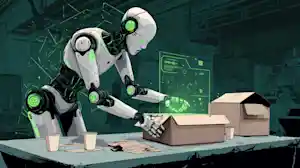
The YouTube University for Robots
Here's the genius part: DreamDojo doesn't require robots to physically practice millions of tasks. Instead, it watches humans do everyday things—opening doors, moving boxes, cooking—and builds a mental model of how the world works.
Think of it as the difference between reading about riding a bike versus actually falling off one a hundred times. Except in this case, the AI gets the benefits of observation without the scraped knees.
The collaboration reads like an academic all-star team: UC Berkeley, Stanford, UT Austin, and Nvidia researchers working together. That's not just one lab's pet project—that's a signal that this approach has serious legs.
Why This Changes the Game
Traditional Robot Training:
Physical Practice → Trial & Error → Expensive
↓ ↓ ↓
Slow Scale Limited Variety $$$$$
DreamDojo Approach:
Human Videos → World Model → Transfer to Robot
↓ ↓ ↓
Fast Scale Infinite Variety $
The economics are wild. Training robots traditionally requires expensive hardware, controlled environments, and thousands of hours of physical practice. DreamDojo learns from video data that already exists—or can be collected cheaply with regular cameras.
We're talking about potentially reducing the time and cost to train humanoid robots by orders of magnitude. That's not incremental improvement. That's a paradigm shift.
The Humanoid Robot Race Just Got Interesting
Companies like Tesla, Figure, and Boston Dynamics are pouring billions into humanoid robots. The bottleneck? Teaching them to function in unstructured human environments without breaking things (or themselves).
DreamDojo might be the unlock they've been waiting for. Instead of programming every possible scenario, you show the robot how humans handle variability and let it build intuition.
Will this work perfectly? Of course not. But it's the kind of leap that separates demos from deployment.
What This Means for You
If you're building in robotics, this research matters. If you're investing in AI, pay attention to world models—they're becoming the foundation for embodied intelligence.
Hot take: In five years, we'll look back at DreamDojo as the moment robots stopped being programmed and started being taught. The companies that figure out how to scale this approach will dominate the next wave of automation.
The question isn't whether robots will learn from human video. The question is: what happens when they get really, really good at it?
What tasks would you want a robot to learn by watching you? Or is the whole idea lowkey terrifying?