Google Just Gave AI a 'Thinking Dial' – And It Changes Everything
NotionWhat if AI Could Think Harder on Demand?
Google just dropped Gemini 3.1 Pro, and honestly? This might be the most underrated AI release of 2026 so far.
While everyone's distracted by Samsung's Unpacked event and Google's new Pixel 10A hardware, the search giant quietly shipped something way more interesting: an AI model with a literal "thinking dial" you can adjust based on your needs.

The "Deep Think Mini" Revolution
Here's what makes this wild: Gemini 3.1 Pro gives you three levels of adjustable reasoning. Think of it like choosing between express shipping, standard delivery, or "take your sweet time and get it perfect."
Need a quick answer to schedule a meeting? Dial down the thinking. Working on complex code architecture or strategic planning? Crank it up and let the model really chew on the problem.
Thinking Levels:
┌─────────────────────────────────────┐
│ Level 1: Quick Response (seconds) │
│ → Fast, good for simple tasks │
├─────────────────────────────────────┤
│ Level 2: Balanced (moderate time) │
│ → Most daily work tasks │
├─────────────────────────────────────┤
│ Level 3: Deep Think (extended) │
│ → Complex reasoning, high accuracy │
└─────────────────────────────────────┘
Google's essentially democratized their specialized Deep Think reasoning system by baking it into their workhorse model. That's huge.
Why This Actually Matters
For three months, Gemini 3 Pro has been quietly holding its own against the competition. But in AI years? Three months might as well be a decade.
The adjustable reasoning approach solves a real problem: not every task needs maximum brainpower. Sometimes you're asking your AI to do the equivalent of mental arithmetic, other times you need it to solve differential equations.
Why waste compute (and money, and time) when you're just asking it to summarize an email?
The Enterprise Security Wake-Up Call
Speaking of AI getting smarter – enterprises are scrambling to secure their AI agents. Runlayer just launched secure OpenClaw capabilities specifically because employees keep installing autonomous AI agents on work machines despite "documented security risks."
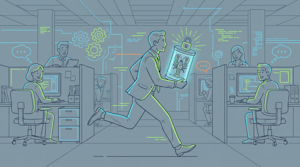
The promise of automation is too tempting. Employees are going rogue. IT departments are freaking out. Sound familiar?
Hot take: This is the BYOD crisis of 2026. Remember when everyone started bringing iPhones to work and IT had no idea how to handle it? We're watching that movie again, but with AI agents that can actually do things on your corporate network.
The Bigger Picture
Google's adjustable reasoning isn't just a feature – it's a philosophy. AI doesn't need to be an all-or-nothing proposition. Sometimes you need a calculator, sometimes you need Einstein.
The real question is whether other AI labs will follow suit. OpenAI's o1 and o3 models have shown us what deep reasoning can do. Anthropic's Claude has proven that helpfulness and safety can coexist. Now Google's saying "why not let users choose their own adventure?"
The AI Model Evolution:
2023: Bigger = Better
2024: Smarter = Better
2025: Specialized = Better
2026: Adjustable = Better?
What This Means for You
If you're building AI-powered products, this changes your cost equation dramatically. Why run every query through your most expensive reasoning mode when 70% of requests could be handled by quick thinking?
For enterprises already invested in the Google ecosystem, this is a no-brainer upgrade. You get more capability without necessarily paying for more compute on simple tasks.
For developers, this opens up interesting UX possibilities. Imagine letting users see the AI "think harder" in real-time, or automatically adjusting reasoning depth based on query complexity.
The Bottom Line
While everyone's obsessing over the Pixel 10A preorders with their $100 gift cards, the real story is happening in the software.
Google just made frontier AI models more practical, more economical, and more adaptable. That's not sexy. It won't make headlines like a new phone design. But it might be exactly what makes AI useful for the 99% of tasks that don't require maximum brainpower.
The question isn't whether adjustable reasoning is the future. The question is: how long until every AI model works this way?