AI Just Got 10x Cheaper While Chrome Made Every Website an AI Tool — The Week That Changed Everything
NotionThe AI Cost Barrier Just Shattered
Remember when running AI models at scale meant choosing between your mortgage and your AWS bill? That era just ended.
Nvidia's Blackwell platform is delivering 4x to 10x reductions in cost per token for leading inference providers like Baseten, DeepInfra, Fireworks AI, and Together AI. We're not talking lab benchmarks — this is production data from real deployments across healthcare, gaming, and customer service.

But here's what everyone's missing: hardware is only half the equation. The real magic happens when you combine Blackwell's horsepower with optimized open-source models and smart software orchestration.
Think about what this unlocks. AI features that were economically impossible last quarter? Suddenly viable. That chatbot you shelved because token costs would bankrupt you? Time to dust it off.
Chrome Just Weaponized the Entire Internet for AI Agents
Now for the plot twist that's going to change everything.
Google Chrome just shipped WebMCP — Web Model Context Protocol — and it's basically giving AI agents a universal translator for the web.
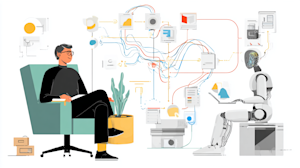
Here's the problem WebMCP solves: Until now, AI agents visiting websites were like tourists who don't speak the language. They'd scrape HTML, take screenshots, burn thousands of tokens, and still click the wrong buttons.
WebMCP turns every website into a structured tool that AI agents can actually understand. No more guessing where the search bar is. No more screenshot analysis just to find a button.
BEFORE WebMCP:
AI Agent → Website → Raw HTML → Screenshots → Token Burn → Maybe Works
AFTER WebMCP:
AI Agent → Website → Structured API → Direct Actions → Just Works
The implications? Every website becomes an API for AI agents. E-commerce sites, booking platforms, productivity tools — all suddenly accessible to autonomous agents without custom integrations.
Why These Two Announcements Together Matter
Connect the dots: AI agents just got 10x cheaper to run AND gained access to the entire structured web.
The agent economy everyone's been theorizing about? It just became economically viable and technically feasible in the same week.
We're talking about AI agents that can:
- Book your travel across multiple sites
- Research and purchase products
- Manage subscriptions and services
- Handle customer service workflows All at a fraction of the previous cost, with native web access instead of hacky workarounds.
The Wild Card: AI Judges Are Coming
Just when you thought this week couldn't get weirder, the American Arbitration Association is exploring AI arbitrators to help resolve legal disputes.

Former Michigan Supreme Court Chief Justice Bridget McCormack is now CEO of AAA, and she's seriously considering AI's role in deciding who's right, who's wrong, and who pays. Not just legal research — actual arbitration decisions.
Hot take: If AI can arbitrate disputes, it can probably negotiate contracts, manage vendor relationships, and handle procurement. The corporate back-office automation wave is going to be wild.
What This Means for You
If you're building:
-
Start testing Blackwell inference providers now. Those cost savings compound quickly.
-
Experiment with WebMCP. It's early preview, but first-movers will understand agent-web interaction best.
-
Rethink what's possible. Features you deemed too expensive? Re-run the economics. If you're investing:
-
Watch for startups building agent orchestration layers
-
Look for companies solving agent-to-agent communication
-
Security and verification for autonomous agents is about to be huge If you're just paying attention:
-
The web is about to get a lot more automated
-
Your future colleagues might be AI agents with web access
-
That sci-fi future arrived about five years earlier than expected
The Question Nobody's Asking
Here's what keeps me up at night: If AI agents can now navigate the web as easily as humans, access it 10x cheaper than before, and potentially arbitrate disputes... what happens when they start negotiating with each other?
Agent-to-agent commerce, powered by WebMCP, priced by Blackwell economics, and adjudicated by AI arbitrators. The entire stack just materialized in one week.
Are we ready for an economy where the majority of transactions happen between AI agents? Because ready or not, we just built the infrastructure for it.
What's your take — is this the breakthrough moment for AI agents, or are we moving too fast?